George Washington’s Greatest Speech?

On the morning of March 15, 1783, George Washington strode into the “New Building” or “Temple” as the structure was referred as, to address the assembled officers of the Continental Army. He asked General Horatio Gates if he could have the floor to say a few words and when he unfolded his pieces of paper on the podium, the words lost their importance.

Why? Continue reading “George Washington’s Greatest Speech?”

Norman MacLeod’s Campaign Journal, October 13, 1778

Sketch of Wabash River, 1778
Sketch of the Wabash River Made During Hamilton’s 1778 Campaign (Wikimedia Commons)

In the summer of 1778, Lieutenant Colonel George Rogers Clark of the Virginia militia launched one of the most daring American military operations of the Revolutionary War when he invaded the “Illinois country” and captured Cahokia and Kaskaskia in modern-day Illinois and Vincennes in southern Indiana, effectively neutralizing British power on the Illinois, Wabash, and Mississippi Rivers.  Henry Hamilton, Lieutenant Governor of Quebec and Britain’s Superintendent for Indian Affairs in Detroit, could not allow such audacity to succeed, lest Britain’s influence with the western Indian nations wane.  Learning of Fort Sackville’s fall at Vincennes on the Wabash River, he set out to recapture it.

Continue reading “Norman MacLeod’s Campaign Journal, October 13, 1778”

The Battle of the Clintons

This past spring I was able to visit a fascinating historic site, one that is largely overlooked in the larger story of the Revolution. Many of us know that in 1777 the British planned to use the Hudson River to cut off New England from the other states.

With General William Howe in New York City, and General John Burgoyne moving south from Canada, the plan seemed destined for success. Yet Howe decided to move his army by water to the Chesapeake and advance on Philadelphia.

It is commonly assumed that his lack of cooperation with Burgoyne was one major reason for the latter’s failure, and surrender, at Saratoga. In fact, a force of British troops did ascend the Hudson, hoping to cooperate with Burgoyne. I was able to follow and retrace the little known expedition.

Continue reading “The Battle of the Clintons”

Interview with Michael Troy from American Revolution Podcast

Emerging Revolutionary War recently had the pleasure, via e-mail, to interview historian Michael Troy who is the man behind the popular American Revolution Podcast site. A link to his page follows this interview.

TROY_new-250x300
Mike Troy
  1. What was the reasoning behind starting American Revolution Podcast?

I have been a big fan of American history my whole life.  The American Revolution has always held a fascination for me.  I had originally planned to produce a blog on the topic, simply out of my love of reading and writing about it.  I decided to turn the project into a podcast because I’ve enjoyed listening to other history podcasts myself. I figured others might appreciate a thorough podcast that covered this topic.

  1. Where did your personal interest in this time period of American History begin?

I’m old enough to remember the bicentennial celebrations as a boy.  I also grew up in the Philadelphia area, where there are so many locations with memories of the era.  I always felt an attachment particularly to that time in our history. Beyond that, the Revolution was more than American independence.  It was about creating a new country based on the ideals of representative democracy, at a time of the world was still ruled by hereditary monarchies.  It was a bold experiment that really changed the world in which we live today. Continue reading “Interview with Michael Troy from American Revolution Podcast”

Summer Lecture on Summer of 1787

This past July I had the pleasure to attend and present at the American Battlefield Trust Teacher Institute. One of the keynote speakers was David O. Steward, the author of Summer of 1787: The Men Who Invented the Constitution. During his talk, there were a few points that stuck out to me and I share them with you.summer of 1787 stewart

  • 72 elected, 55 attended, and 35 delegates were probably there all summer.
  • Out of the 55 that attended, 39 affixed their signatures to the document

In reference to George Washington, Stewart candidly remarked he had “more influence by keeping his mouth shut” almost as if by his calm, quiet demeanor, he was displaying that “I trust in you and I’ll try and make it work” with whatever the delegates designed in that hot and stuffy room in Philadelphia.  Continue reading “Summer Lecture on Summer of 1787”

Captain John Asbhy

Part Two

Captain John Ashby and his fellow Virginians would face their greatest test of the war on the afternoon of September 11th, 1777 at the Battle of Brandywine. Following a wide flank march the bulk of the Crown forces emerged on Washington’s right flank, ready to trap and smash the Continental Army. Washington reorganized his line, drawing men north in a desperate attempt to meet the new threat. The Third Virginia was ordered into position far in advance of the American lines – their objective was to hold a wooded hill near the Birmingham Friends Meeting House in order to buy time for the rest of the American troops to take up position. Ashby and his fellow officers arranged their men among the buildings and woodlot of the Samuel Jones farm and awaited the attack that was certain to come.

The Battle of Brandywine, September 11, 1777 (American Battlefield Trust)

Continue reading “Captain John Asbhy”

Missionary Extraordinaire: David Zeisberger

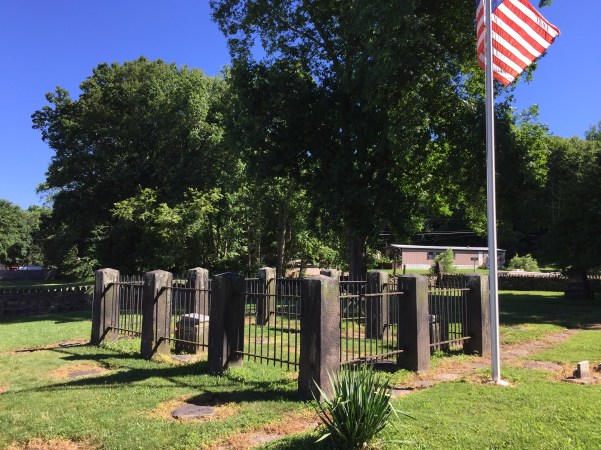
Over the summer, I took a family excursion to several Revolutionary War sites in Ohio, some of which I recently wrote about.  In particular, I wanted to trace the experience of several Moravian missionaries and their congregations in the no-man’s land of the frontier.  Traveling a back road along the Tuscarawas River between the villages of Gnadenhutten and New Schoenbrunn, we stumbled across the graves of David Zeisberger (1721-1808) and several notable missionaries at the crossroads of Goshen.

IMG_2559
Moravian Cemetery at Goshen, Ohio.  (Author Photo)

Continue reading “Missionary Extraordinaire: David Zeisberger”

War in the Mississippi Valley: Part II

Previously I wrote about the fighting in the Mississippi Valley and Gulf coast during the Revolution.  Below is a brief overview of the modern states in the Mississippi Valley and a summary of their colonial origins and events there during the Revolution:

Alabama

The French colonized the area that is now Alabama in the early 1700s.   They constructed a fort at what is now Mobile, and this was the capital of La Louisiane- not New Orleans.  The French presence was never very strong or deep, and they had few settlements in the region.

The French established trade network with Native Americans in the interior.  The English were also interested in the region, and trades and explorers penetrated the northern area of modern-day Alabama.

The 1763 Treaty of Paris, which ended the Seven Years’ War after France’s defeat by Britain, resulted in France ceding its territories east of the Mississippi to Britain.  Great Britain came into undisputed control of the region between the Chattahoochee and the Mississippi rivers. The portion of Alabama below the 31st parallel became a part of British West Florida.  Today this is the long section of the Alabama-Florida state line.

The portion north of this line became a part of the “Illinois Country,” established by the British Crown for use by Indians.  At the conclusion of the Revolution, The British ceded West Florida to Spain, and the land to the north to the United States.  Yet there was disagreement about where the division between Spanish and American territory was, laying the foundation for a long boundary dispute between the two nations.

P1010793

Continue reading “War in the Mississippi Valley: Part II”

Captain John Ashby

Emerging Revolutionary War welcomes guest historian Travis Shaw. 

Part One

As he looked northward across the open ground in front of his position, Captain John Ashby could see the advance guard of the British army moving steadily closer. They came on in a loose, open line, taking time to return the fire of Ashby’s men. Made up of red-coated light infantry and their German counterparts, the rifle-armed Jaegers, the advance guard were the cream of the Crown forces – men chosen for their fitness, marksmanship, and ability to endure hardship. Ashby and his men were veterans, so they must have known they’d be in for a fight. As the battle intensified around him, one wonders if Captain Ashby’s thoughts turned to home. The Brandywine Valley of Pennsylvania was a long way from his native Virginia Piedmont.

The Crooked Run Valley in northern Fauquier County looks much as it did when John Ashby lived there two centuries ago (Author_s photo)
The Crooked Run Valley in northern Fauquier County looks much as it did when John Ashby lived there two centuries ago (Author’s photo)

John Ashby was born in 1740 in northwestern Fauquier County, among the foothills of the Blue Ridge Mountains. The son of Robert Ashby and Rosanna Berry, he grew up at Yew Hill, the family estate that lay just a few miles from the Gap that bears the family’s name to this day[1]. John’s uncle and namesake, Captain “Jack” Ashby commanded a company of Virginia rangers during the French and Indian War, where he made the acquaintance (and drew the ire) of a young George Washington[2]. Continue reading “Captain John Ashby”

War in the Mississippi Valley: Part I


While the majority of Revolutionary War action occurred on the Atlantic coast, important events occurred farther west as well.  This article takes a look at this lesser known part of the conflict.

It is well known that France was an eager ally of the fledgling United States, secretly making loans and selling supplies to the Revolutionaries.  When the French felt the Americans had proved themselves at Saratoga, France officially entered the war, and became the first foreign nation to recognize the United States.  On February 6, 1778 both nations signed the Treaty of Alliance, in which France declared war on Great Britain and recognized American Independence.

Spain was also on the sidelines, watching events closely.  Unlike France, when Spain declared war on Great Britain, they did not recognize American independence.  By the Treaty of Aranjuez on April 12, 1779, Spain entered the war as an ally of France, and agreed to attack British forts in the Mississippi Valley and Gulf Coast.   Spain’s King Charles III would assist his first cousin, Louis XV of France in the conflict with the British.  The Spanish hoped to recover territory lost from the British, and take advantage of Britain’s preoccupation with the rebellious colonies.

The British were already realigning their military for a worldwide conflict: facing France, Spain, and the Netherlands in India, Gibraltar, Europe, and the high seas.  The Gulf of Mexico and Mississippi Valley was yet another front, one that was poorly defended by the British.

In the first action of this vast theater, American marines raided Fort Bute, a British fort located at Bayou Manchac, about 115 miles from New Orleans.  The attack on the far western border of British West Florida took place in February, 1778. Continue reading “War in the Mississippi Valley: Part I”