

A version of this post appeared in the Emerging Civil War blog on August 17, 2018.

Those who know me know of my “interest” in famous Confederate partisan, John S. Mosby. Ok, some would say “love affair,” but either way, I grew up reading about Mosby and his exploits during the Civil War. It was not until later in my life that I started to read about the most interesting part of Mosby’s life—not his time in the war, but his time AFTER the war.
Mosby had a deep interest and passion in American history and you can see that on a trip that Mosby took north in April 1906 to one of the sacred sites of America’s founding: Boston, Massachusetts. In a 1906 letter to his friend Sam Chapman (a former member of Mosby’s Rangers), Mosby describes his visit and the many ironies (as a southerner) he experienced. Continue reading ““I hope my visit to Boston will do good…” Confederate Colonel John S. Mosby and American Revolution”


 The post-colonial era conflict between the United States and Great Britain, known in America as the War of 1812, has often been described as America’s second war for independence. In UNSHACKLING AMERICA: HOW THE WAR OF 1812 TRULY ENDED THE AMERICAN REVOLUTION, published by St. Martin’s Press 2017, author Willard Sterne Randall promotes the idea that this war, largely unremembered today in Great Britain, was actually a continuation of the earlier American Revolution.
 This past Thursday, July 27, 2017, Campaign 1776, the initiative of the Civil War Trust, announced the preservation of 184 acres at two sites in New York state. One tract of land was pivotal to the United States success in the Saratoga Campaign in 1777 and where a U.S. fleet was saved during the War of 1812.
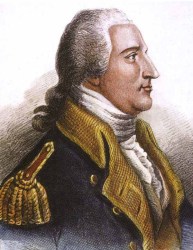
 Instead, Clinton decided to launch a raid into Connecticut in the hope of forcing Washington to respond. Clinton intended that this be a raid, but he also recognized that New London could be used as a permanent base of operations into the interior of New England. Clinton appointed Arnold to command the raid because he was from Connecticut and knew the terrain.
 One of the emails was from our friends at The Museum of the American Revolution and was geared toward younger audiences. The books were geared toward different age groups, bracketed for 12 years and up, ages 7 to 12 years, and then ages 2 to 7. A final category was for graphic novels.
 Emerging Revolutionary War Era