Battle of Fort San Carlos – Westernmost Battle of the American Revolution

St. Louis, Missouri is considered the gateway to the west for the United States beginning in the 19th century. In the 18th century, St. Louis was not on the radar of many in the burgeoning United States.
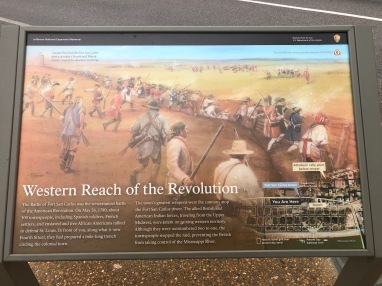
IMG_6914
Western Reach of the Revolution, wayside informational tablet at Gateway Arch National Park (author collection)

However, the westernmost engagement of the American Revolution unfolded in the town of St. Louis, crushing British designs to conquer the territory from the Spanish, who were allied with the French and thus the United States.

On May 26, 1780, a hodgepodge force of 300 townsfolk, free and enslaved blacks, French settlers, and Spanish soldiers rallied to defend their town from the advance of a combined British and Native American force. Continue reading “Battle of Fort San Carlos – Westernmost Battle of the American Revolution”

Announcing the First Emerging Revolutionary War Symposium!

Mark your calendars for September 28, 2019!  Emerging Revolutionary War is excited toPrint announce that we are partnering with Gadsby’s Tavern Museum and The Lyceum of Alexandria, VA to bring to you a day long Symposium focusing on the American Revolution.
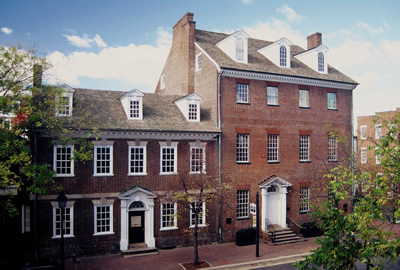
GTHomepageExterior(1).jpg
Gadsby’s Tavern Museum

Alexandria is George Washington’s hometown and we feel is a great place for us to start this new endeavor. Historic “Old Town” Alexandria is home to dozens of museums and historic sites as well as great pubs, restaurants and shops. Gadsby’s Tavern Museum is the premier 18th century tavern museum in the country and is host to the famous annual George Washington Birthnight Ball.  The Lyceum: Alexandria’s History Museum will be our host location. Today The Lyceum serves as the City’s history museum and is a center of learning through lectures, demonstrations and exhibits.

This year’s theme is “Before They Were Americans”  and will highlight several topics

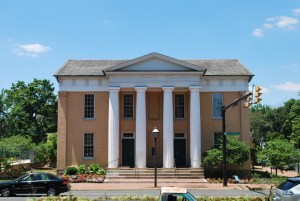
Lyceum_017_720x483_72_RGB
The Lyceum

about the years leading up to the American Revolution. Our speakers include: Phillip Greenwalt, Katherine Gruber, William Griffith, Stephanie Seal Walters and Dr. Peter Henriques as the keynote. Registration will open on July 1, 2019 through AlexandriaVA.gov/Shop or by calling 703-746-4242. Stay tuned as we highlight each of our speakers and their topics.


“You are a fine fellow”: The April 24, 1777 Attack on Boonesborough

Emerging Revolutionary War welcomes historian Daniel T. Davis. 

1777.

Boone
An elder Daniel Boone (courtesy of the LoC)

The conflict ignited at Lexington and Concord finally reached beyond the Allegheny Mountains as the British stepped up their raids on American settlements in Kentucky. With so many troops dedicated to the colonies, Henry Hamilton, the Lieutenant Governor at Detroit, relied on Native tribes allied with the Crown to carry on the war effort. In March, Shawnees began to harass Harrodsburg, Logan’s Station and Boonesborough. Founded as part of the Col. Richard Henderson’s proprietary colony of Transylvania along the banks of the Kentucky River, Boonesborough derived its name from one of the most famous long hunters of the day and resident, Daniel Boone. Continue reading ““You are a fine fellow”: The April 24, 1777 Attack on Boonesborough”

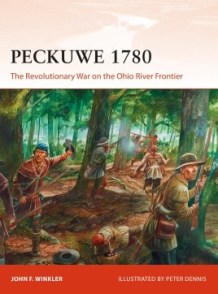
Book Review: Peckuwe 1780, by John F. Winkler

erw-book-reviews-11


9781472828859_6

John F. Winkler, Peckuwe 1780: The Revolutionary War on the Ohio River Frontier, (Oxford: Osprey Publishing, 2018).   $24.00

I once read a review comparing Osprey Publishing’s monographs on particular battles, weapons, uniforms, or campaigns to “flash cards,” which made me smile.  As a kid, I somehow acquired stacks of flashcards laying out the technical specs of various military aircraft or ships and thought they were the greatest things since sliced bread.  Those were the days before Amazon or Barnes & Noble, when a kid had to depend on the local library and Waldenbooks for books about history, which they didn’t have in large numbers.  The Osprey monographs were a windfall of sorts when the local library started carrying them.  They’re not intended for an academic audience by any stretch, but can play a useful role in interesting popular audiences in places, people, and events that might otherwise prove too obscure or too intimidating for a young or casual reader.  So, when I came across John F. Winkler’s new monograph for Osprey, Peckuwe 1780, I snapped it up as much for sentimental reasons as for my interest in the American Revolution on the western frontier.

Continue reading “Book Review: Peckuwe 1780, by John F. Winkler”

From the Preservation Front: “Liberty Trailblazers – American Battlefield Trust”

ABTFrom our friends at American Battlefield Trust (ABT) comes the following announcement and call for assistance. 
The first line of the announcement sums up the importance of this new initiative of the American Battlefield Trust:

“They secured our liberty. It’s time for us to honor their legacy.” 

In a collaboration between the ABT, the National Park Service, and the South Carolina Battleground Trust, the joint initiative is to highlight the “tremendous significance of these places to American independence.” Their combined goal is to preserve 2,500 acres of American Revolutionary War battle lands in the Palmetto State.

As of the middle of this month, 308 acres of hallowed ground has been saved. The land protected are part of the battlefields of Camden and Eutaw Springs, which “bookend a period of incredible consequence to the American Revolution.”

This is a great start, but as that means, it is a beginning and the ABT will need all our help to make it happen. This new direction will bring preservation, education, and technology together into one investment and keep the effort going, until this land is saved for the present and future generations.

For those readers of ours that are already members, thank you. For those that are interested in learning  more, click here.

To check out the various sites and history associated with the Liberty Trail, click here.

First Shots

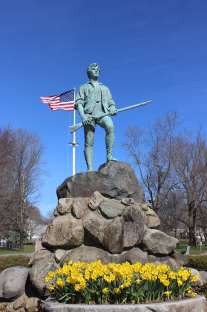
IMG_6846-min
Lexington Minuteman Statue , facing the route of the British advance (author collection)

We all have bucket list items that we want to check off in our lifetime. Some revolve around traveling, some may revolve around learning a new hobby or skill. We may have different categories of items. The last is true for me.

One of those categories was to see the first shots of the wars of the United States (okay and the French and Indian War, since that started the march toward independence, when looked at through the lens of history and distance). Continue reading “First Shots”

George Rogers Clark Recaptures Fort Sackville, Part II

Vincenes (Army Center of Military History)
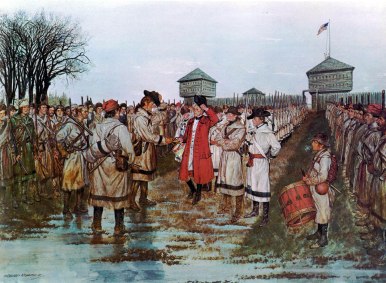
Hamilton Surrenders Fort Sackville (U.S. Army Center for Military History)

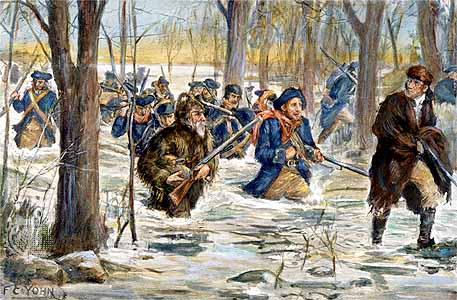
By February 23, 1779–two hundred and forty years ago—Virginia Lieutenant Colonel George Rogers Clark had marched his little army from the Mississippi across the flooded plains of what would become southern Illinois to the French town of Vincennes on the Wabash River, in modern Indiana.  His men were tired, hungry, and waterlogged, but they had made it safely across the Wabash and delivered themselves to the same shore as the town and Fort Sackville, then defended by the much-hated British Lieutenant Governor Henry Hamilton.  His river scouts had managed to find a small, dry hillock covered by a grove of trees and within sight of the town and Clark’s force, about 170 strong, lay in the grove drying their clothes by the sun, occasionally taking a wandering citizen from the town prisoner.   Clark later reported:

Continue reading “George Rogers Clark Recaptures Fort Sackville, Part II”

George Rogers Clark Recaptures Fort Sackville, Part I

March to Vincennes (Wikimedia Commons)
March to Vincennes by Frederick Coffay Yohn, 1875-1933 (Wikimedia Commons–Most of Clark’s men would not have dressed in the blue uniforms visible here, but would have dressed in fur and buckskin like the individual in the middle of the picture.)

Last fall, I posted several pieces following British Lieutenant Governor Henry Hamilton’s campaign in the Illinois territory as seen through the eyes of Captain Norman MacLeod.  MacLeod led an advance party stuck with the logistical and diplomatic mission of moving 33,000 pounds of supplies and trade goods south from Detroit in order to mobilize the local Indian tribes as British allies.  Hamilton’s campaign culminated with the successful capture of Fort Sackville (Vincennes, IN) on December 17, 1778.  Since it’s the 240th anniversary of the campaign, I thought I’d continue the series by shifting to the American perspective, particularly that of Virginia Lieutenant Colonel George Rogers Clark and one of his Captains, Joseph Bowman.  This is not a campaign history by any stretch.  It’s meant more to be considered in combination with portions of MacLeod’s diary that appeared last fall.  Taken together, they might give rise to a few different ideas about the Americans and British fighting the Revolution on the frontier.

Although he planned to recapture the entire Illinois territory, Hamilton decided to winter at Fort Sackville and resume his campaign in the spring.  He dismissed the bulk of his force, settling in at the fort with just under 100 men.  Normally, this would have been a prudent choice.  Hamilton did not expect Clark to retake the field until spring brought about the customary campaign season and dispersing his army eased the logistical burden of maintaining so many men idle in the wilderness.  Hamilton had under-estimated the meddle of his adversary.

Continue reading “George Rogers Clark Recaptures Fort Sackville, Part I”

The Battle of the Kegs (January 5th, 1778)

Francis Hopkinson
Francis Hopkinson, Signer of the Declaration and Satirical Lyricist

The Philadelphia Campaign did not end well for the Continental Army after three separate defeats at Brandywine, Paoli, and Germantown followed by the British occupation of the new nation’s capital.   Among other things, however, it would produce an amusing little ditty commemorating an attack on the British on January 5, 1778 for American audiences eager to poke fun at the British.

When informed that the British had occupied his adopted hometown, Benjamin Franklin reportedly waved off his concern and replied, “No, Philadelphia has captured Howe.”[i]  Franklin was more militarily astute than many politicians observing the war.  When his army captured Continue reading “The Battle of the Kegs (January 5th, 1778)”

Disaster on the Eastern Frontier

Part Two
For Part One, click here.

The British and loyalists would not have to wait long. Word of the landing reached the Massachusetts government within a matter of days, and preparations for a counterattack began almost immediately. There was such a hurry to respond that the General Assembly voted to carry out the operation with state forces rather than wait for Continental assistance.[1] Despite the initial rush it still took a month to assemble a force of over 1,000 militiamen, as well as the food, arms, and other supplies to sustain them. All of these troops and their supplies would be transported by a fleet of 21 transports, accompanied by nearly twenty state and Continental navy vessels and privateers. Among the warships the largest was the Frigate Warren of 32 guns which served as the flagship of Commodore Dudley Saltonstall. The Connecticut born officer was given overall command of the naval forces – no small task given the lack of experience with large scale fleet actions among his subordinates. Command of the land forces was given to Massachusetts Brigadier Solomon Lovell. Lovell has seen experience early in the war outside of Boston, but was also relatively untested in battle. The inexperience and poor communication between Saltonstall and Lovell was to have a decisive impact on the coming expedition. Notable among the other officers in the expedition was Paul Revere, who commanded the Massachusetts artillery. The expedition was also joined by a band of the local Penobscot Indians allied to the Continental Congress.

The New England fleet entered the Penobscot Bay on July 25th and immediately attempted a landing. Clearly outnumbered and with their works incomplete, General McLean and his men were determined to resist the Americans, but expected the worst. Saltonstall’s fleet sailed in close to the shore and exchanged cannon fire with both the British defences and the three remaining Royal warships, now under the command of Captain Henry Mowatt. In the confusion and smoke the Americans lowered seven launches full of marines and militiamen, but as they neared the shore they were met by a hail of musket fire[2]. At least one of the attackers – a Native American – was killed and the boats returned to the safety of the fleet. It was an inauspicious start to the battle for the New Englanders and already the relationship between the two commanding officers was becoming strained. General Lovell knew little about sailing or naval operations. He questioned the Commodore as to why he couldn’t just sail his fleet into the harbor and blast the British to pieces while his troops landed under their covering fire. The Connecticut seaman replied curtly, exclaiming “You seem to be damn knowing about the whole matter! I am not going to risk my shipping in that damned hole!”[3]

On the 26th a second militia landing on the peninsula was repulsed after the lead boat carrying militia Major Daniel Littlefield was swamped by British chain shot, drowning the Major and two privates.That same day, however, the Americans scored a small victory when a force of 200 Continental marines and artillerymen landed on Nautilus Island and captured the small British battery there[4]. More artillerymen were landed and soon the Americans had a battery from which they could harass the British shipping. With the Americans making some headway Captain Mowatt withdrew the remaining British ships deeper into the harbor, creating a defensive line across the Bagaduce River.

Castine harbor, looking out roughly where Captain Mowatt anchored the British transports and warships (Author_s photo)
Castine Harbor, looking out roughly where Captain Mowatt anchored the British transports and warships (Author’s photo)

Continue reading “Disaster on the Eastern Frontier”