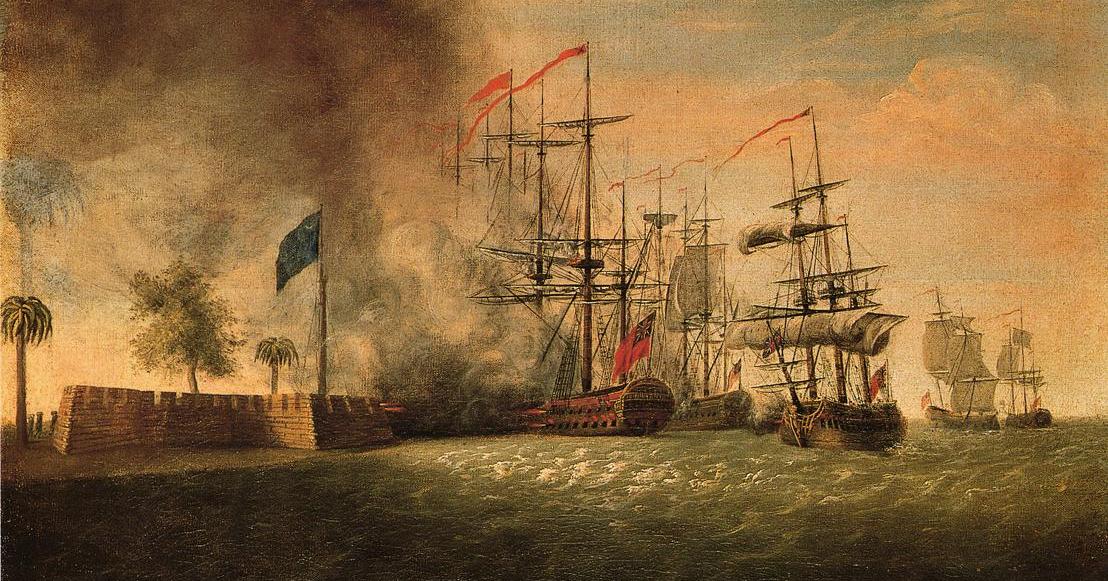
On June 28, 1776, nine British warships under the command of Sir Peter Parker weighed anchor and began moving toward Sullivan’s Island outside of Charleston, South Carolina. Col. William Moultrie, commanding the 2nd South Carolina Regiment in an unfinished palmetto log fort, ordered his men to their posts to prepare for a defense. The first four British ships moved into position and anchored 400 yards from the fort. In an amazing display of British firepower, the British ships began to fire broadsides, simultaneously firing all the cannon from one side of the ship. The broadsides were deafening as hundreds of British cannonballs screeched through the air and slammed into the palmetto walls of the fort. Local newspapers later described the cannonade as “one of the most heavy and incessant cannonades perhaps ever known.”
As the walls of the fort shook violently, Moultrie’s men coolly manned their cannon and returned the fire as best they could. A continuous roar of cannon fire from hundreds of artillery pieces belched forth, quickly filling the harbor with the sight of white smoke and the smell of burning sulfur. The crash of the cannonballs mixed with the screams of wounded men filled the air.
As the British cannon boomed away, their solid shot hit the walls of the palmetto fort. But the soft, spongy wood of the palmetto (and the 16 feet of sand behind them) absorbed the shock and the balls either buried themselves into the wall or bounced off and fell harmlessly to the ground. Meanwhile, the British ships endured terrible damage from the American shore batteries. American cannonballs smashed into the oak of the British ships, causing havoc and bloodshed.
Emerging Revolutionary War welcomes guest historian, Nathaniel Parry, a brief bio follows this post.
The American Revolution was a victory of liberty over tyranny made possible by a mixture of courage, grit, and virtue. It was also, however, a morally ambiguous affair with some of the main participants motivated as much by ambition as they were by idealism. While many of the founding generation prided themselves on their virtue, vice also played an important role in their rebellion against the British, and to fully appreciate this reality, it is useful to examine the role of alcohol, which turns up at many of the revolution’s key moments.
In ways sometimes subtle and often quite important, alcohol provided the impetus for the nation’s founding, belying the pristine image of an honorable rebellion of virtuous patriots against liberty-hating tyrants. From John Hancock celebrating the repeal of the Stamp Act in 1766 by “treat[ing] the Populace with a Pipe of Madeira Wine,” as one newspaper reported,[i] to militiamen wetting their whistles at Buckman Tavern before the Battle of Lexington and Concord,[ii] to General George Washington ordering “an extra ration of liquor to be issued to every man”[iii] in celebration of Britain’s recognition of America’s independence in 1783, alcohol pops up again and again during the revolutionary era. This was a reflection of the fact that drinking was an integral part of daily life in early America.
John Hancock and the Liberty Affair
With heavy drinking habits widespread among all classes and regions, the rum distillery industry flourished in the colonies, made possible by cheap imports of molasses from the West Indies. By one count, there were more than 150 rum distilleries in New England before the revolution, and throughout the colonies some five million gallons of rum were being produced.[iv] In order to ensure access to the cheapest molasses available and to bypass restrictive English regulations such as the Navigation Acts and 1733 Molasses Act, smuggling became rampant in the colonies, a problem that Parliament sought to address with the adoption of the Sugar Act in 1764. An attempt to crack down on smuggling and increase revenue, the Sugar Act had the effect of increasing the price of manufacturing rum and negatively affected the exporting capacity of New England distillers, leading to consternation among merchants. It also heavily taxed the formerly duty-free wine from Madeira, Portugal, which was popular throughout the colonies. This angered both merchants and consumers.[v]
Join us Sunday, June 23, at 7:00 p.m. on our YouTube page (https://www.youtube.com/@emergingrevolutionarywar8217), for a chat with Doug Cubbison, Board President of the Braddock Road Preservation Association. We will discuss all things involving the group’s work to preserve and educate the public about the story of the French and Indian War in Western Pennsylvania.
The Braddock Road Preservation Association is an advisory organization that seeks to research, develop, interpret and promote the French and Indian War history of Jumonville, Dunbar Camp, and the Braddock Road. A secondary purpose is to research, develop, interpret and promote the history of the Pennsylvania Soldiers’ Orphans School. The Association functions in an advisory capacity to the Board of Directors of Jumonville, Inc.
On this date, in 1812, President James Madison, the fourth president of the United States of America, signed declared war on Great Britain, to go into effect the next day. This is the date Madison signed the measure into law, after sending it to Congress on June 1.
The wording, in its entirety, is below:
BY THE PRESIDENT OF THE UNITED STATES OF AMERICA A PROCLAMATION Whereas the Congress of the United States, by virtue of the constituted authority vested in them, have declared by their act bearing date the 18th day of the present month that war exists between the United Kingdom of Great Britain and Ireland and the dependencies thereof and the United States of America and their Territories: Now, therefore, I, James Madison, President of the United States of America, do hereby proclaim the same to all whom it may concern; and I do specially enjoin on all persons holding offices, civil or military, under the authority of the United States that they be vigilant and zealous in discharging the duties respectively incident thereto; and I do moreover exhort all the good people of the United States, as they love their country, as they value the precious heritage derived from the virtue and valor of their fathers, as they feel the wrongs which have forced on them the last resort of injured nations, and as they consult the best means under the blessing of Divine Providence of abridging its calamities, that they exert themselves in preserving order, in promoting concord, in maintaining the authority and efficacy of the laws, and in supporting and invigorating all the measures which may be adopted by the constituted authorities for obtaining a speedy, a just, and an honorable peace. In testimony whereof I have hereunto set my hand and caused the seal of the United States to be affixed to these presents. Done at the city of Washington, the 19th day of June, 1812, and of the Independence of the United States the thirty-sixth. By the President: JAMES MADISON. JAMES MONROE, Secretary of State.
*Transcript courtesy of the Miller Center at the University of Virginia.*
While driving near York, Pennsylvania, I decided to stop by Prospect Hill Cemetery to visit the grave of Union General William Franklin. The cemetery was massive, and after locating Franklin’s grave and snapping a few photographs, I continued up the hill where I saw a plot devoted to dead Union soldiers who died while being treated at the army hospital located in York during the war. They were men from all throughout the North. Many of them simply having volunteered to fight, marched away from home, got sick, and died.
An older grave caught my eye just a stone’s throw away from the Civil War graves – a notable one that I did not know was in the cemetery. It was the grave of another non-Pennsylvanian. In fact, he was a New Yorker, and died in York in June of 1778, while a sitting member of the Continental Congress. It was the final resting place of a signer of the Declaration of Independence – Philip Livingston.
Philip Livingston certainly is not one of the Founding Fathers we remember. In fact, we probably remember his brother, William, who served as New Jersey’s Governor during the war, more. But Philip had a very impressive resume and played a part in nearly every major political conference in the colonies held in the years leading up to and during the early days of the American Revolution.
Born in 1716, Livingston graduated from Yale and pursued a career in the import business. Quickly, he built on his status and influence after relocating to Manhattan. He attended the Albany Congress in 1754, and was a member of the Stamp Act Congress, New York’s Committee of Safety, and president of the New York Provincial Congress in 1775. The prior year, Livingston was appointed to the First Continental Congress and was forced to flee his Manhattan home with his family when the British occupied the city in 1776. While he participated in the Second Continental Congress, he also served in the New York Senate.
Unfortunately, Livingston would never get to see his dream of an independent American nation become a reality. Following the British capture of Philadelphia in 1777, the Continental Congress relocated to York, Pennsylvania. Livingston had been suffering from dropsy, and his health was quickly deteriorating. He died suddenly in York while Congress was in session on June 12, 1778, and was laid to rest on Prospect Hill.
Grave of Philip Livingston, Prospect Hill Cemetery, York, Pennsylvania
If you ever find yourself near York, take the time to visit the grave of a Founding Father who, far from home, died before the cause in which he pledged his life and sacred honor for could be won.
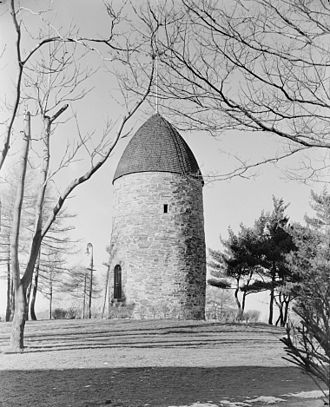
The Charlestown, now Somerville, Powder Magazinewas the focus of the September 1, 1774 Powder Alarm. The historic structure still stands today.
Join ERW this Sunday at 7pm as we welcome back historian and author J.L Bell. We will discuss the events in Boston and Massachusetts in 1774 after the passing of the now popularly called “Intolerable Acts” in response to the Boston Tea Party. A time of political, social and economic upheaval for everyone in the colony, the events that transpired had big impacts across all the colonies and set the stage for April 19, 1775. J.L. Bell is a renowned historian who operates a very comprehensive blog focused on Boston 1775 (https://boston1775.blogspot.com/ )
Grab a drink and sit back and learn about the events that rapidly progressed during 1774 towards warfare and bloodshed. J.L. Bell will provide a great insight into how things quickly deteriorated in Massachusetts and how that impacted all the colonies as a whole. Unlike previous revelries, this revelry will run live on our You Tube channel at: https://www.youtube.com/@emergingrevolutionarywar8217 . Due to new rules and regulations with Facebook, we can no longer stream our revelries live on Facebook. We hope that will change in the future. We will post the You Tube video to our Facebook page after the live broadcast. We hope to see you this Sunday, June 9, 2024 at 7pm on our You Tube Channel!
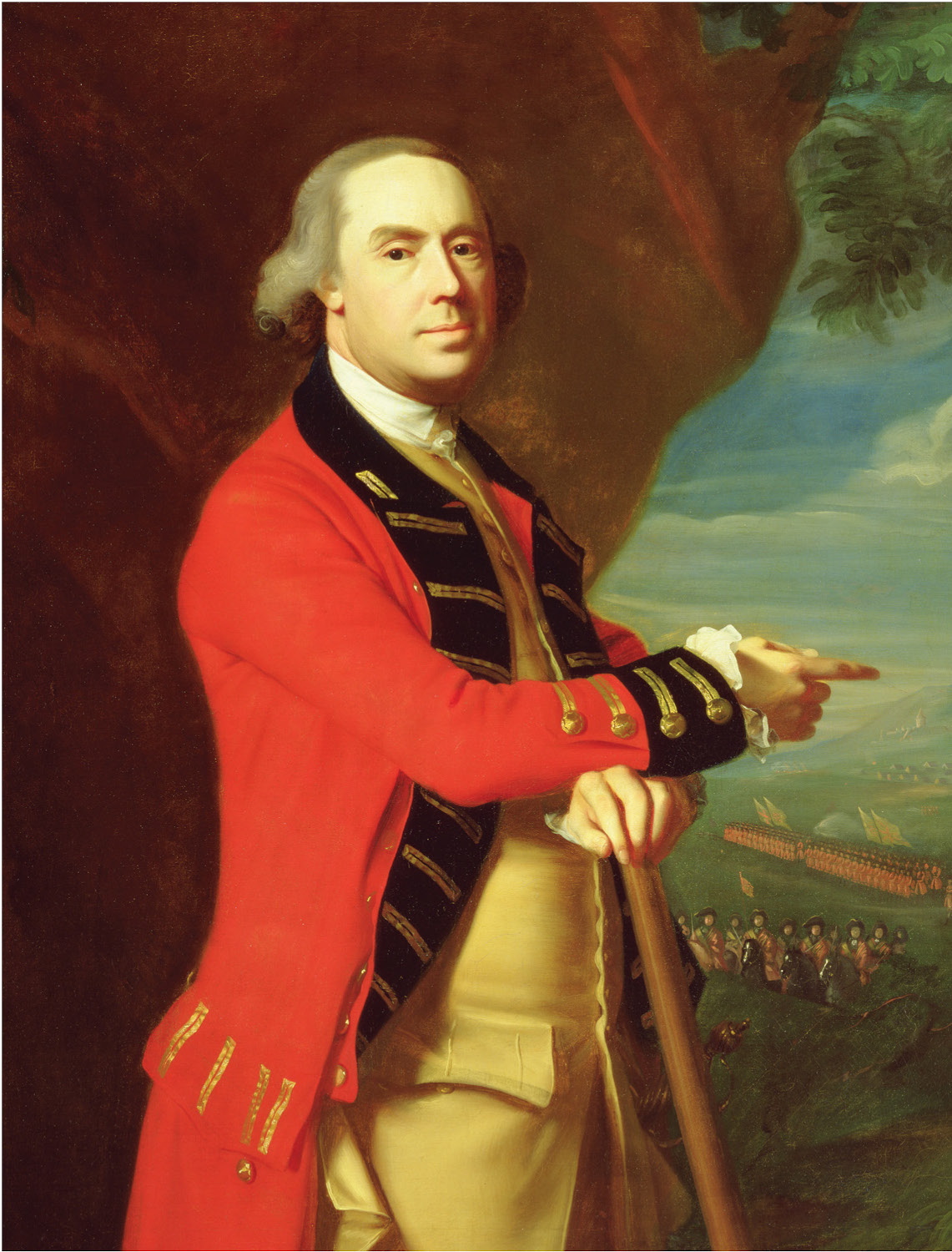
On May 13, 1774, the newly Royally appointed Governor of Massachusetts arrived in Boston. General (and now Governor) Thomas Gage was well known to the American colonists. Gage served as a Major in the 44th Regiment of Foot in the French and Indian War, most notably in the Battle of the Monongahela. When several of Gage’s officers fell, he took up temporary command of the 44th during the battle. During that time Gage got to know George Washington and both men respected each other. After the war, Gage received a promotion to Brigadier General and was appointed the military governor of Montreal.
Portrait of Thomas Gage by John Singleton Copley
Soon after, Gage became the commander in chief of all British forces in North America. He moved to New York city to administer the King’s forces in the American colonies. Gage’s popularity increased as he focused on creating peace with the Indian population along the new western border of the colonies through various treaties. Gage and his American born wife, Margaret, were well accepted into New York society. Gage always believed that the democratic spirit that pervaded the colonies were a threat to British rule. With many of the colonists accustomed to electing their own representation, he believed this created more division with the home country than making them British citizens. Gage had long believed that democracy was too rooted in colonial society. In 1772 he wrote “democracy is too prevalent in America.”
As tensions began to increase within the American colonies, Gage’s response exasperated the situation. He contracted many of the British military posts back to the colonial cities along the eastern seaboard (which in part led to the Boston Massacre in 1770). He believed a show of military strength would help put out the fires of discontent. Further, he concluded that the unrest was mostly pushed by a very small minority, not the vast majority of colonials. He underestimated how the masses would respond to his hard hand. Now Gage, who was in Great Britain when the news of the Boston Tea Party arrived, was seen as a great fit to handle the crisis in Boston. His military back ground and experience as a civil leader (and liked by many in the colonies) made him on paper an ideal candidate for Governor of Massachusetts in this unsettled time.
Many in Boston welcomed Gage when he arrived that May. Mostly because they had become so disenchanted with former Governor Thomas Hutchinson, who was completely not up to the task that faced him in 1773. The recently passed Boston Port Act (passed in March 1774, this act closed the port of Boston until the loss of the tea was paid for) grew tensions in Boston, but large segments of the population believed that those that destroyed the tea should pay for it. Soon, it was the next piece of news from Great Britain that shook the foundation of something the majority of Bay Staters took pride in, self-rule.
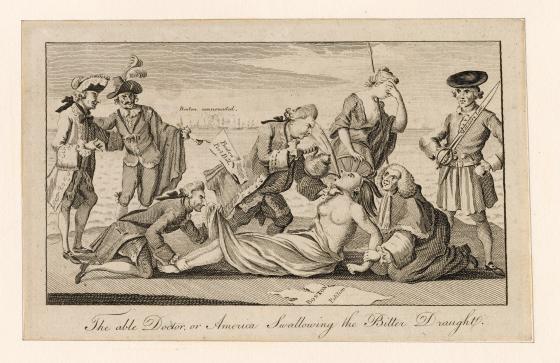
“The able doctor, or America swallowing the bitter draught,” 1774. This illustration depicts the British forcing a Native American woman (a symbol of the American colonies) to drink tea.
Word arrived of two new laws recently passed on May 20, 1774, Parliament passed the Massachusetts Government Act and Impartial Administration of Justice Act. These two acts were punitive in measure and sought to bring the colony under direct Royal control. The Government Act stated “Parliament passes this act turning the Massachusetts Council into a body of crown appointees“ (similar to other Royal colonies like Virginia) when up to then they were elected. Also, it restricted the traditional “town meeting” to just one a year. Town meetings were an essential local governing tool to not just govern localities but also to provide open communication across the colony. The Justice Act gave the governor the power to a trial to another colony or to Great Britain if he determined “that an indifferent trial cannot be had within the said province.” Judgment by one’s peers was a long-standing tradition in Massachusetts and in British law dating back to the Magna Carta. These measures essentially dissolved important aspects of the Massachusetts Charter of 1691.
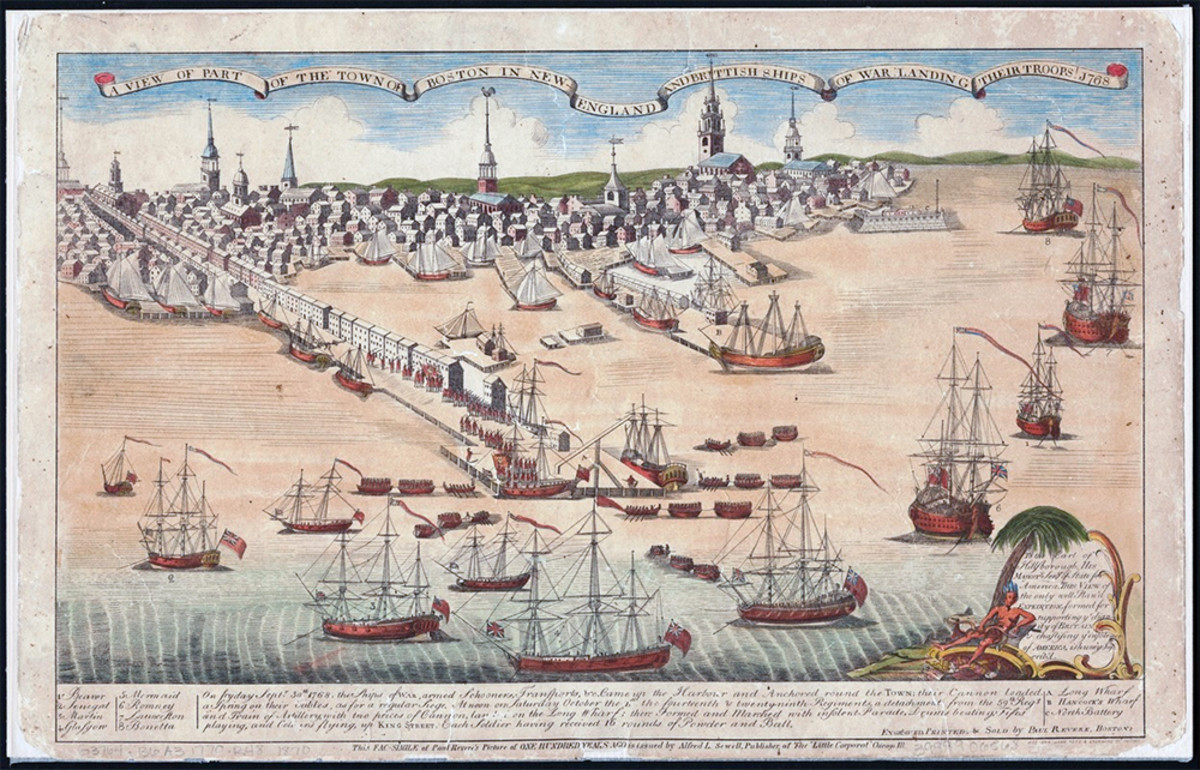
Furthermore, Gage inflamed the situation more in Boston by bringing with him more British Regular troops. By the end of 1774, Gage had more than 4,000 soldiers in and around Boston. Gage could see the situation worsening but was unable to determine how to best deal with what confronted him. Whig leaders such as Dr. Joseph Warren, Paul Revere and Samuel Adams used these newly passed acts as proof that Great Britain was infringing on their rights and liberties. Using groups like the Sons of Liberty, Whig leaders began to gain great influence as many of the colonists began to turn against Great Britian. Soon many of these community organizations began to arm themselves and coordinate with the other colonies via committees of correspondence. Gage, feeling the situation was becoming dangerous wrote back to authorities in Great Britain “Affairs here are worse than even in the Time of the Stamp Act, I don’t mean in Boston, for throughout the Country. The New England Provinces…are I may say in Arms.” Events were beginning to build towards armed revolution, not just in Massachusetts, but across a more unified American colonies.
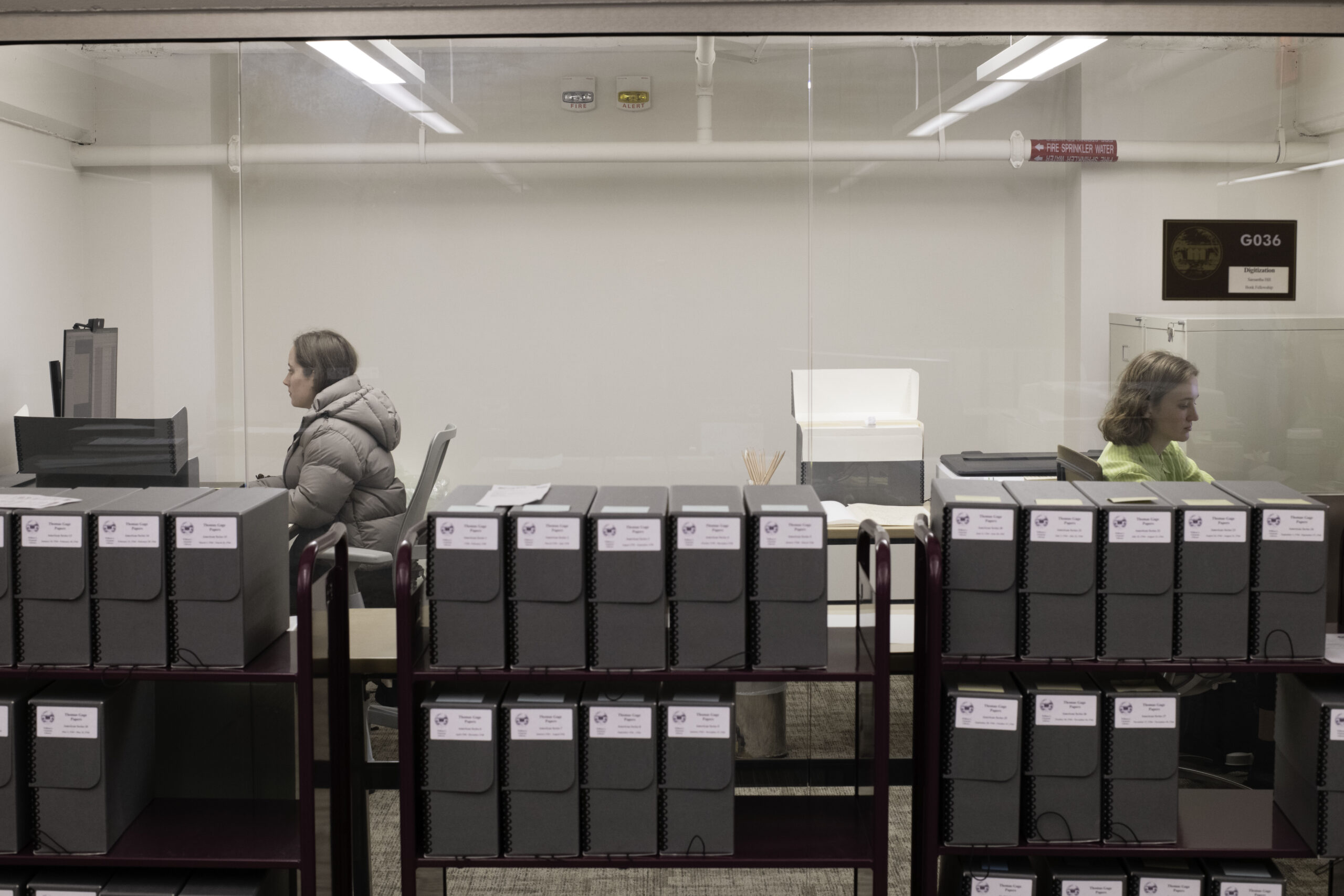
William L. Clements Library at the University of Michigan is now digitizing Gate’s papers with help from a grant of the National Endowment for the Humanities. Over the next year or so, this great resource on the colonial America will become accessible via the library’s website.
Emerging Revolutionary War welcomes guest author Jim Bish as he describes the important events that happened in Williamsburg in May of 1774:
News of the Boston Tea Party reached London in January 1774 and Parliament reacted decisively passing the Boston Port Act on March 31, 1774, calling for the closing the port of Boston on June 1, 1774. News of the Boston Port Act reached Virginia before May 19th severely disrupting Virginia’s House of Burgesses planned business. After hearing the news about Boston, the Burgesses primary focus and action was a response to the Boston Port Act. Virginia Burgess Richard Henry Lee described his response to the news of the Port Bill to his brother, Arthur Lee, who resided in London, “We had been sitting in Assembly near three weeks, when a quick arrival from London brought us the Tyrannic Boston Port Bill, no shock of Electricity could more suddenly and universally move— Astonishment, indignation, and concern seized on all. The shallow Ministerial device was seen thro instantly, and every one declared it the commencement of a most wicked System for destroying the liberty of America, and that it demanded a firm and determined union of all the Colonies to repel the common danger.”
The Virginia capitol building as it appeared in 1774. (Wikipedia)
By May 24th the burgesses had drafted their response. According to Thomas Jefferson, “We were under conviction of the necessity of arousing our people from the lethargy into which they had fallen as to passing events; and thought that the appointment of a day of general fasting and prayer would be most likely to call up and alarm their attention . . . we cooked up a resolution, somewhat modernizing their phrases, for appointing the 1st day of June, on which the Port bill was to commence, for a day of fasting, humiliation and prayer, to implore heaven to avert from us the evils of civil war, to inspire us with firmness in support of our rights, and to turn the hearts of the King and parliament to moderation and justice.”
On May 26th, Purdie and Dixon’s Virginia Gazette published the House of Burgesses resolution and as ordered. Broadsides of the resolution were also published and probably preceded the newspapers printing. Governor Dunmore referred to the broadside printing when, on 26 May, he summoned the burgesses to the council room and thus addressed them: “I have in my hand a Paper published by Order of your House, conceived in such Terms as reflect highly upon his Majesty and the Parliament of Great Britain; which makes it necessary for me to dissolve you; and you are dissolved accordingly.”
Royal Governor Lord Dunmore. While politically at odds with many of the Burgesses, they remained personally cordial. The morning of the 26th, he ate breakfast with George Washington. On the evening of May 27th, the Burgesses attended a ball at the Governor’s Palace for Lady Dunmore.
Having been dissolved by the royal governor had certainly occurred before when there were grievances by Virginia’s House of Burgesses to either Parliament or the Crown. In 1765, Governor Fauquier dissolved the House of Burgesses when it passed a resolution against the Stamp Act. In May 1769 the Virginia House of Burgesses passed several resolutions condemning Britain’s stationing troops in Boston following the Massachusetts Circular Letter of the previous year. As a result, Governor Botetourt abruptly dissolved the General Assembly after the House of Burgesses adopted those measures. This time, the dissolution of the House seemed more worrisome. When the House of Burgesses were dissolved in 1769 much of the disagreement was about sending royal troops to Massachusetts. By 1774, troops had been in the Boston area for five years and now there was the deeper threat of using those troops to cease the livelihood of all Bostonians by closing down their means of trade, the harbor. It became clearly evident to the Virginia burgesses that if the Crown could take actions like this against Bostonians, they could also be used against Virginians.
To many of the burgesses, the dissolution of the House was surprising. This sentiment is revealed in a letter by George Washington to George William Fairfax on June 10, 1774 in which Washington states, “this Dissolution was as sudden as unexpected for there were other resolves of a much more spirited nature ready to be offered to the House wch. would have been unanimously adopted respecting the Boston Port Bill as it is calld but were withheld till the Important business of the Country could be gone through” Like earlier burgesses had done after being dissolved, most of the then, former-burgesses, agreed to meet at Raleigh Tavern. At least 89 of the previously assembled 120 Burgesses reconvened their extra-legal session in the Apollo Room at Raleigh Tavern a few blocks away as it was the largest facility to hold such a group.
The reconstructed Raleigh Tavern. The original burned in 1859. (Colonial Williamsburg)
On the following day of May 27, those “former burgesses” agreed to an association. They condemned Great Britain in that it had taken away their just, antient, and constitutional rights stating that the Boston Harbor bill is a most dangerous attempt to destroy the constitutional liberty and rights of all North Americans. The former burgesses charged that parliament was at fault for the purpose of raising a revenue, without the consent of the people and particular blamed the East India Company of attempting to ruin of America, by setting a precedent in favor of arbitrary taxation and as a result Virginia called for a boycott of the East India Company. They concluded by instructing the committee of correspondence to propose to the corresponding committees of the other colonies to appoint deputies to meet in Congress at such place, annually, as should be convenient to direct, from time to time, the measures required by the general interest. They declared that an attack on one colony should be considered as an attack on the whole. This “Former Burgesses Association” document was signed by the 89 former burgesses and printed in Williamsburg for all Virginians to read. There was rarely a more unified effort by deprived lawmakers in colonial Virginia. Before heading home to their respective counties, Virginia’s former burgesses were moving in a singular direction ignited by the Boston Port Act and now brought to a strong flame by the actions of Governor Dunmore.
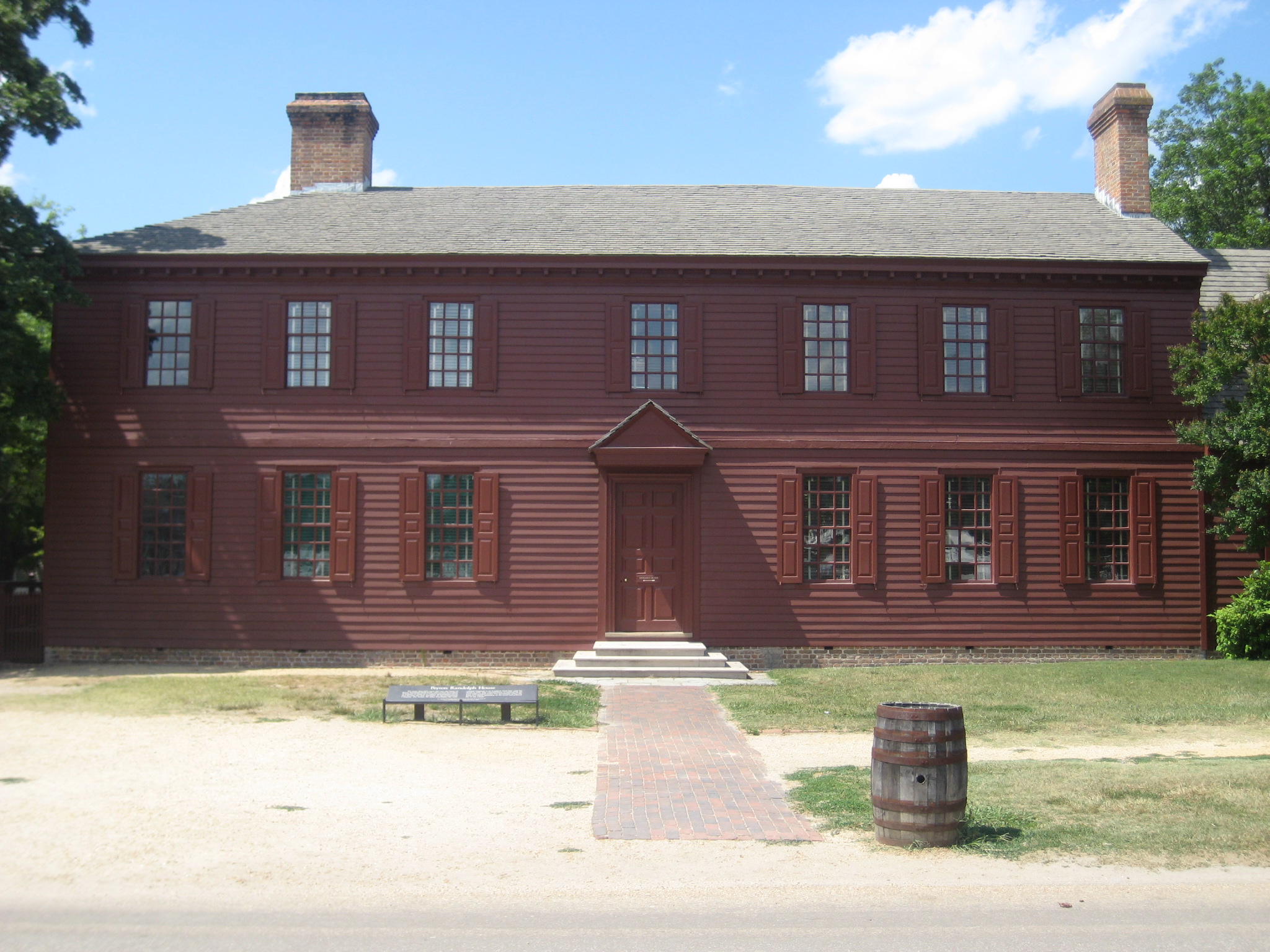
On May 30th, three days after issuing the Association document, Peyton Randolph received correspondence from three different committees, Boston, New York, and Annapolis concerning their request for action. Randolph decided to locate former Burgess members who had not yet returned to their home counties and he located twenty-five. Out of necessity, those twenty-five former burgesses served as members of the Committee of Correspondence for Virginia.
The Peyton Randolph House
The following day, those 25 former burgesses were much more detailed and stronger in their messaging from that which appeared in the 89 former-burgesses association document. After hearing the sentiments from Boston, Philadelphia, and Maryland the 25 former burgesses thought that “we ought to adopt the scheme of Nonimportation to a very large extent.” They also defined a date and place, August 1, 1774 in Williamsburg, for the former burgesses to meet as a legislative body. They stated, “We fixed this distant Day in Hopes of accommodating the Meeting to every Gentleman’s private Affairs, and that they might, in the mean Time, have an Opportunity of collecting the Sense of their respective Counties.”
Virginia was headed quickly towards Revolution . . .
Follow our Facebook page this Sunday and Monday as Emerging Revolutionary War historians and guests will be in Colonial Williamsburg on the 250th anniversary of the dissolution of the House of Burgesses and the gathering of the former Burgesses at the Apollo Room in the Raleigh Tavern.
Join Emerging Revolutionary War this Sunday evening at 7 p.m. ET on our Facebook page as we sit down for a pre-recorded discussion with historian and author Mike Cecere and his daughter, Jennifer Cecere to discuss their new historical fiction books centered on the Revolutionary War. “Witness to Revolution” focuses on the lives of children growing up in Williamsburg, Virginia during the beginning part of the Revolution. Their recently released second book, “Witness to War” follows the characters through the tumultuous war.
We discuss the importance of historical fiction, the differences between writing non fiction and historical fiction, and the challenges and opportunities getting the next generation interested in the Revolutionary War. Grab a drink and join us for a great discussion!
Emerging Revolutionary War welcomes guest author Michael Aubrecht
At the time of the Revolutionary War it is estimated that there were over a half million African-Americans living in the thirteen colonies. As the rebellion’s patriotic call to fight for liberty grew, the British government sought to undermine the expanding Continental Army by soliciting slaves who ran away from their masters. By promising to grant them their freedom and security, the Redcoat ranks were able to boost their manpower on the battlefield instead of constantly relying on the importation of additional troops who took months to travel to the Americas from England. Some of these all-black units even flourished as in the example of the Royal Ethiopian Regiment and later, the Black Pioneers.
According to the Atlantic Canada Virtual Archives Website Black Loyalists in New Brunswick: “In November 1775, Virginia Governor Lord Dunmore, hoping to bolster the British war effort, encouraged slaves and indentured servants of the Patriots to join His Majesty’s army. Many did so. When the British evacuated their army from Boston to Halifax in 1776, a “Company of Negroes” was part of the entourage. British Commander-in-Chief Sir Henry Clinton extended the policy of appealing to African Americans in his Phillipsburg Proclamation of 1779 in which he offered security behind British lines to ‘every negro who shall desert the Rebel Standard.'”
Following the British Army’s surrender, it is estimated that nearly 35,000 loyalists fled the United States to settle north in the provinces of Canada including the maritime regions of New Brunswick and Nova Scotia. Nearly 3,500 free black loyalists were among them including many who had fought alongside the Redcoats on behalf of the English crown. New Brunswick saw thousands of African-Americans settle in as new citizens and many went on to fight again for Britain in the War of 1812. Despite their service to the king, many black loyalists and their families still faced racial discrimination, although it paled in comparison to the institution of slavery that continued to thrive in the southern United States.
Michael Aubrecht is the author of Thomas Jefferson and the Virginia Statute for Religious Freedom: Faith & Liberty in Fredericksburg.








 Emerging Revolutionary War Era