ERW Weekender: In the Footsteps of James Madison

Emerging Revolutionary War welcomes guest historian Kate Bitely 

In the Foot Steps of James Madison.

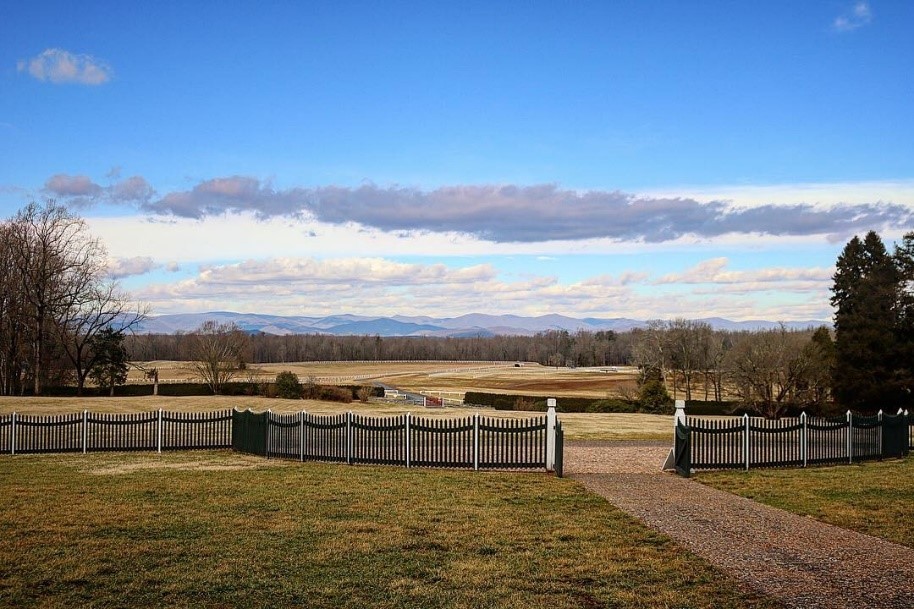
A view of the front yard of Montpelier
A view from the front yard of Montpelier (author collection)

Spring is finally here in Virginia and if you are looking for a place to explore that offers a great outdoor experience, get in the car and head to Montpelier, in Orange Virginia. James Madison’s plantation home offers visitors a glimpse of what life was like in colonial America.   Be sure to start your trip with the feature film in the welcome center that provides highlights of Montpelier’s lengthy history dating back to the mid 1700’s.  The preserved property has something to offer everyone including hikes, gardens, and a breath-taking view of the blue ridge mountains. The grounds are filled with opportunities to learn about our nation’s early history and the impact it still has on our country today. Continue reading “ERW Weekender: In the Footsteps of James Madison”

“You are a fine fellow”: The April 24, 1777 Attack on Boonesborough

Emerging Revolutionary War welcomes historian Daniel T. Davis. 

1777.

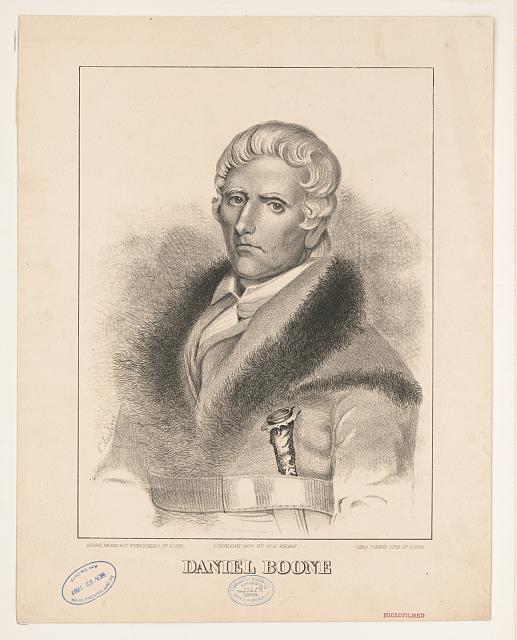
Boone
An elder Daniel Boone (courtesy of the LoC)

The conflict ignited at Lexington and Concord finally reached beyond the Allegheny Mountains as the British stepped up their raids on American settlements in Kentucky. With so many troops dedicated to the colonies, Henry Hamilton, the Lieutenant Governor at Detroit, relied on Native tribes allied with the Crown to carry on the war effort. In March, Shawnees began to harass Harrodsburg, Logan’s Station and Boonesborough. Founded as part of the Col. Richard Henderson’s proprietary colony of Transylvania along the banks of the Kentucky River, Boonesborough derived its name from one of the most famous long hunters of the day and resident, Daniel Boone. Continue reading ““You are a fine fellow”: The April 24, 1777 Attack on Boonesborough”

Women’s History Month: The Story of Anna Maria Lane

Emerging Revolutionary War welcomes guest historian Paige Backus. 

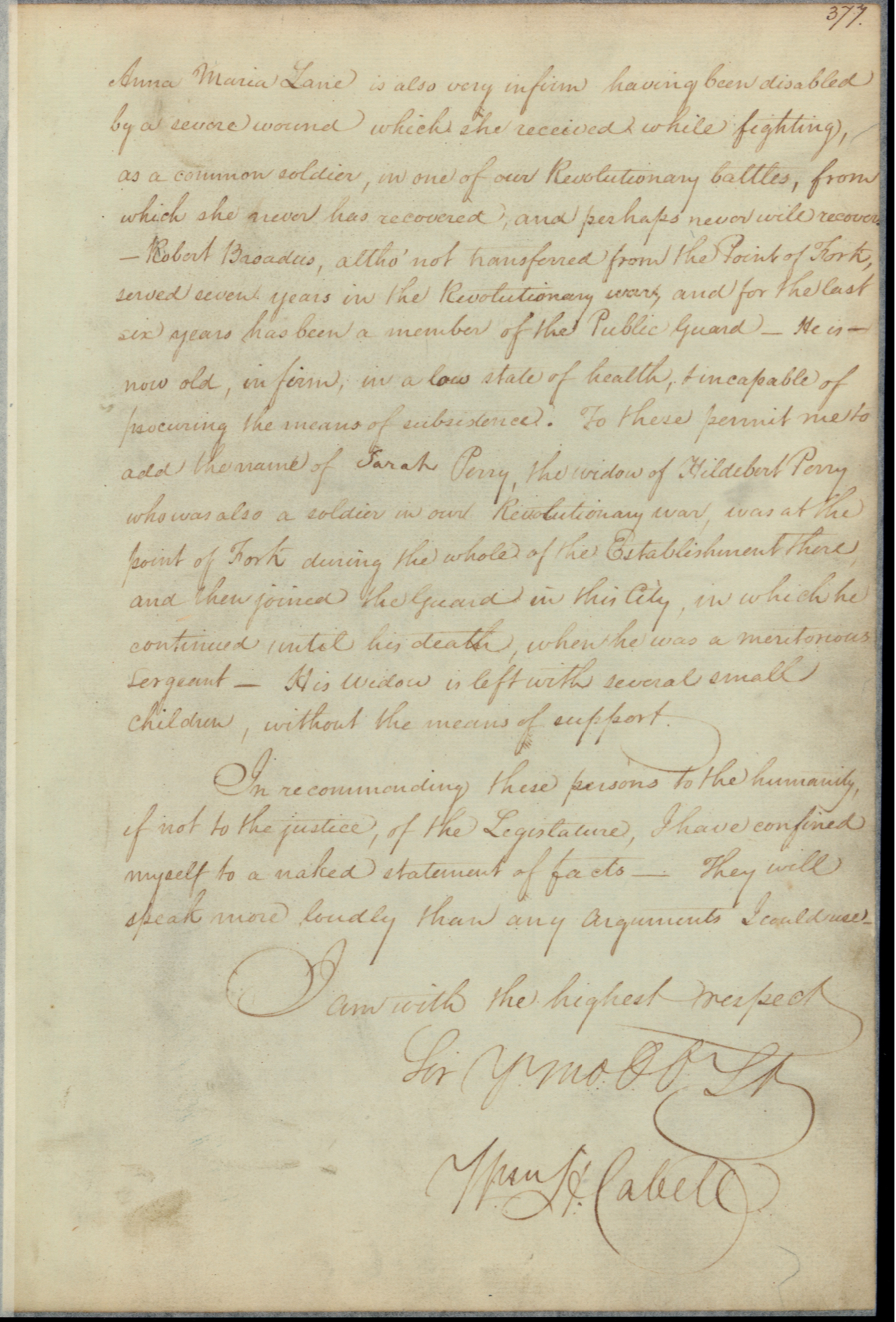
image2
Aron, Paul. “Fighting as a Common Soldier”. Colonial Williamsburg: Trends and Traditions (Spring 2017). Accessed March 12, 2019. Click here for URL.

Women’s History Month is dedicated to celebrating extraordinary women and encouraging the women of today to be the same.  Throughout American history, there are multitudes of women who certainly were put into extraordinary situations and rose to the challenge to make their place in history. Throughout the American Revolution, women were generally not allowed to serve in the armies so they accompanied their husbands to war as camp followers assisting with the cooking, cleaning, nursing and other domestic tasks needed by the army. This is no small feat considering that women were exposed to the hardships and challenges of war, working without the modern technology we take for granted today, and doing it all in skirts. However, one woman named Anna Maria Lane not only followed her husband into war, but she joined him in battle becoming the only known woman in Virginia to serve as a soldier during the American Revolution. Continue reading “Women’s History Month: The Story of Anna Maria Lane”

Captain John Asbhy

Part Two

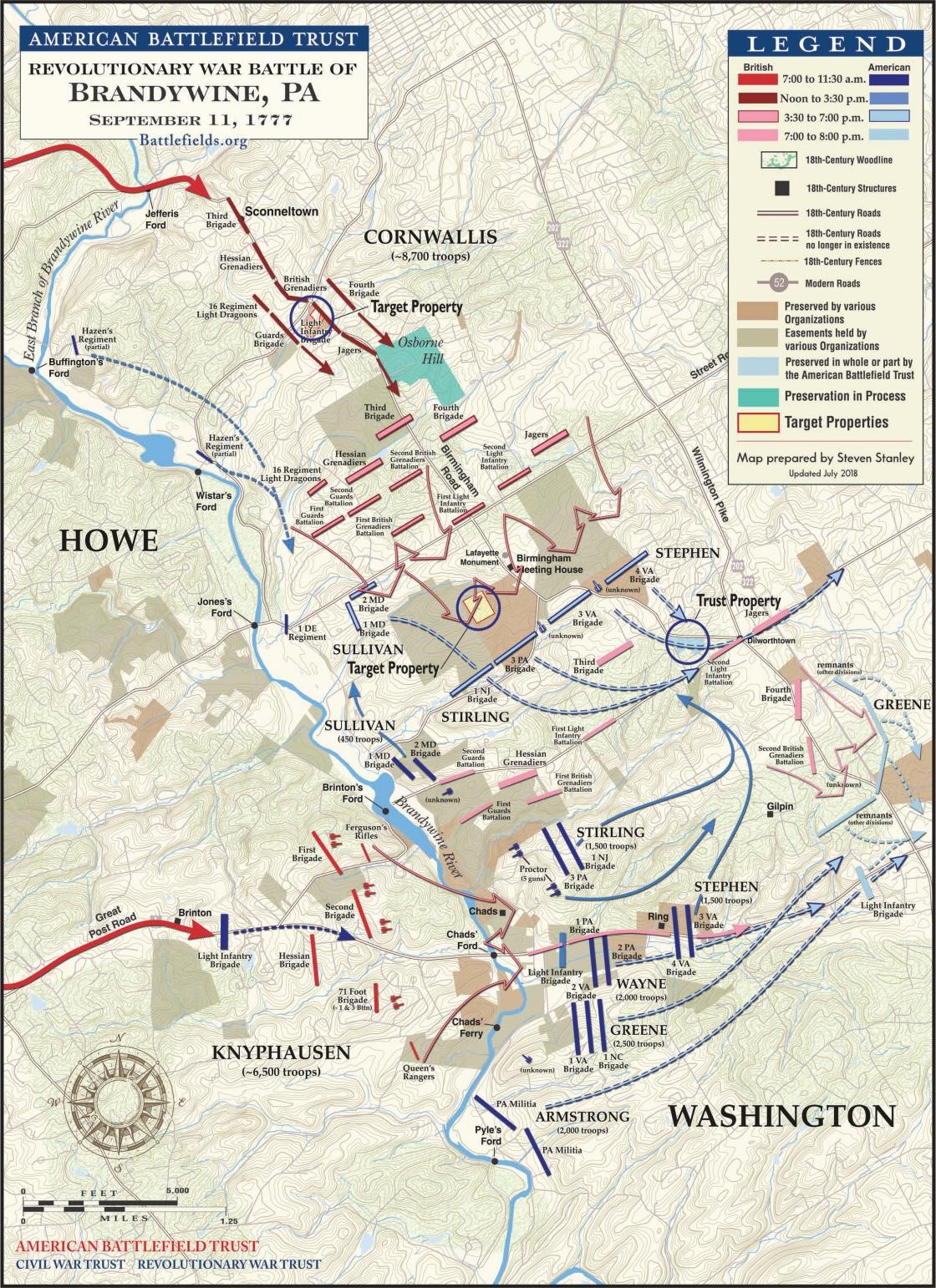
Captain John Ashby and his fellow Virginians would face their greatest test of the war on the afternoon of September 11th, 1777 at the Battle of Brandywine. Following a wide flank march the bulk of the Crown forces emerged on Washington’s right flank, ready to trap and smash the Continental Army. Washington reorganized his line, drawing men north in a desperate attempt to meet the new threat. The Third Virginia was ordered into position far in advance of the American lines – their objective was to hold a wooded hill near the Birmingham Friends Meeting House in order to buy time for the rest of the American troops to take up position. Ashby and his fellow officers arranged their men among the buildings and woodlot of the Samuel Jones farm and awaited the attack that was certain to come.

The Battle of Brandywine, September 11, 1777 (American Battlefield Trust)

Continue reading “Captain John Asbhy”

Captain John Ashby

Emerging Revolutionary War welcomes guest historian Travis Shaw. 

Part One

As he looked northward across the open ground in front of his position, Captain John Ashby could see the advance guard of the British army moving steadily closer. They came on in a loose, open line, taking time to return the fire of Ashby’s men. Made up of red-coated light infantry and their German counterparts, the rifle-armed Jaegers, the advance guard were the cream of the Crown forces – men chosen for their fitness, marksmanship, and ability to endure hardship. Ashby and his men were veterans, so they must have known they’d be in for a fight. As the battle intensified around him, one wonders if Captain Ashby’s thoughts turned to home. The Brandywine Valley of Pennsylvania was a long way from his native Virginia Piedmont.

The Crooked Run Valley in northern Fauquier County looks much as it did when John Ashby lived there two centuries ago (Author_s photo)
The Crooked Run Valley in northern Fauquier County looks much as it did when John Ashby lived there two centuries ago (Author’s photo)

John Ashby was born in 1740 in northwestern Fauquier County, among the foothills of the Blue Ridge Mountains. The son of Robert Ashby and Rosanna Berry, he grew up at Yew Hill, the family estate that lay just a few miles from the Gap that bears the family’s name to this day[1]. John’s uncle and namesake, Captain “Jack” Ashby commanded a company of Virginia rangers during the French and Indian War, where he made the acquaintance (and drew the ire) of a young George Washington[2]. Continue reading “Captain John Ashby”

Origins of a Revolutionary Orator

Studley state historical marker
State of Virginia historical marker for Studley

Nestled in Hanover County, VA, near where modern residential communities meet farm fields that have been worked for centuries, is the site of a colonial-era plantation home called Studley.  It was here on this site that Patrick Henry, the “Voice of the Revolution”, was born.

A 600-acre tobacco plantation, Studley was built in the 1720’s for its original owner, Colonel John Syme and his bride, Sarah, the former Sarah Winston.  The surrounding community, as it does today, took its name from the site. (By the mid-19th century, the Studley area was called Haws Shop, after a nearby blacksmith shop.  In the latter part of May, 1864, Union and Confederate cavalry units fought a dismounted action here just prior to the battle of Cold Harbor.  Prominent among the Union commanders engaged was Brig. Gen. George Armstrong Custer.)

Sketch of Studley
Sketch of Studley

Continue reading “Origins of a Revolutionary Orator”

Visiting Carlyle House

IMG_2250
Carlyle House from the Front (Author Photo)

William Griffith’s examination of the Carlyle House Congress last month (The Carlyle House Congress and Britain’s Military Objectives for 1755) reminded me that I had been remiss in not visiting the site.   So, the family and I set off for Alexandria, VA and a visit to John Carlyle’s home.

Continue reading “Visiting Carlyle House”

George Mason’s Gunston Hall

IMG_2236
Gunston Hall River Entrance (Author Photo)

Gunston Hall’s River Entrance (Author Photo)

George Washington’s estate on the Potomac River is one of the most-visited places in the greater Washington, DC area, as befits the home of the Father of his Country.  Just twelve miles south (by road), however, sits an equally impressive 18th century plantation home.  Gunston Hall was the estate of George Mason IV (1725-1792).  Best known as one of the delegates to the Constitutional Convention who in the end opposed the Constitution’s ratification, Mason doesn’t always get his due in the stories of America’s founding fathers.  But, he was a critical and thoughtful voice in forming the early United States government and enshrining its first ten amendments, the Bill of Rights.  Fortunately, his home is open to the public and easily accessible from the metropolitan Washington area.

Continue reading “George Mason’s Gunston Hall”

Review: First Founding Father: Richard Henry Lee and the Call for American Independence by Harlow Giles Unger

ERW Book Reviews (1)

A member of one of Virginia’s first families, Richard Henry Lee was a critical voice in America’s struggle against Great Britain. Born at the family home, Stratford Hall, in Westmoreland County, Lee was educated in England. In 1758, he entered Virginia’s House of Burgesses. Seven years later, Lee’s efforts on the road to independence began.

In response to the recent passage of the Stamp Act, Lee co-authored what became known as the Westmoreland Resolves. The document condemned fellow colonists who paid the related tax as well as the British Parliament. As tensions rose with Britain, Lee proposed a means for the individual colonies to communicate with one another. This idea birthed the Committees of Correspondence. In 1774, Lee was elected to the Continental Congress which met in Philadelphia. It was here in the early summer of 1776 that Lee suggested a bill for the colonies to break all allegiance with England and form a United States. The proposal was the basis of the Declaration of Independence. Continue reading “Review: First Founding Father: Richard Henry Lee and the Call for American Independence by Harlow Giles Unger”

George Washington; October 17, 1781

While reading background on the siege and victory at Yorktown, Virginia in October 1781, I came across the following passage written by historian Jerome Greene.

     “The officer was then quickly escorted to Washington’s headquarters in a nearby house,       where he delivered Cornwallis’s message: “I propose a Cessation of Hostilities for 24             hours, & that two Officers may be appointed by each side, to meet at Mr. Moore’s house         to settle terms for the Surrender of the Posts of York & Gloucester.” One can only                   imagine the emotions coursing through Washington’s body as he read these words.”

That last line is what really struck me.

Every image we have of George Washington depicts a stoic expression staring back out of us. Historians have a few instances from a long life of the Washington behind the marble, behind the self-imposed restraint, that he crafted for posterity.

However, he was human, he did have a fiery temper and he was a passionate person. One of the reasons he strove so hard to mask those emotions, to keep them in check, to keep perspective, and to persevere.

Those competing inclinations would have been bubbling at the surface on October 17, 1781, when that written communication was handed to him outside Yorktown, Virginia. What that moment must have been like, for Washington, for the French and American forces, and for all those fighting in favor of American independence.

Jerome Greene wondered about it. I am curious about it. Are you?


Siège_de_Yorktown_(1781)
Siege of Yorktown 1836