

Part Three
Click here for parts one and two.
With British soldiers pouring into the fort, Colonel Ledyard ordered a ceasefire, and prepared to surrender Fort Griswold to the victorious British. However, the British disregarded the ceasefire and continuing pouring fire into the American garrison, killing or wounding nearly all of the fort’s defenders. “I believe there was not less than five or six hundred men of the enemy on the parade in the fort,” claimed American soldier Rufus Avery. “They killed and wounded nearly every man in the fort as quick as they could.”

Maj. Stephen Bromfield, the ranking British officer after Montgomery fell, called out, “Who commands this fort?” Ledyard stepped forward and responded, “I did, sir, but you do now.” Another American, Jonathan Rathbun, watched Bromfield run Ledyard through the heart and lungs with Ledyard’s own sword:
“…the wretch who murdered him [Ledyard], exclaimed, as he came near, “Who
commands this fort?” Ledyard handsomely replied, “I did, but you do now,” at the same
moment handing him his sword, which the unfeeling villain buried in his breast! Oh, the
hellish spite and madness of a man that will murder a reasonable and noble-hearted
officer, in the act of submitting and surrendering!”
Continue reading “The Battle of Groton Heights, September 6, 1781: The Fort Griswold Massacre”


 The post-colonial era conflict between the United States and Great Britain, known in America as the War of 1812, has often been described as America’s second war for independence. In UNSHACKLING AMERICA: HOW THE WAR OF 1812 TRULY ENDED THE AMERICAN REVOLUTION, published by St. Martin’s Press 2017, author Willard Sterne Randall promotes the idea that this war, largely unremembered today in Great Britain, was actually a continuation of the earlier American Revolution.
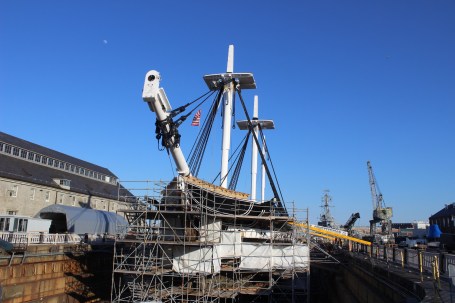
 This past Thursday, July 27, 2017, Campaign 1776, the initiative of the Civil War Trust, announced the preservation of 184 acres at two sites in New York state. One tract of land was pivotal to the United States success in the Saratoga Campaign in 1777 and where a U.S. fleet was saved during the War of 1812.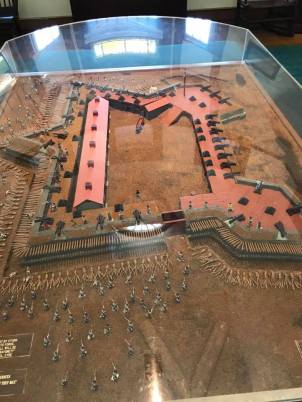
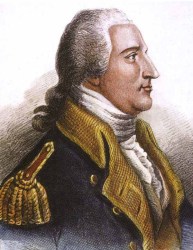
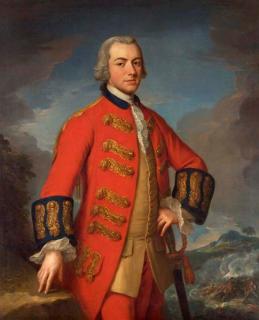 Instead, Clinton decided to launch a raid into Connecticut in the hope of forcing Washington to respond. Clinton intended that this be a raid, but he also recognized that New London could be used as a permanent base of operations into the interior of New England. Clinton appointed Arnold to command the raid because he was from Connecticut and knew the terrain.
 One of the emails was from our friends at The Museum of the American Revolution and was geared toward younger audiences. The books were geared toward different age groups, bracketed for 12 years and up, ages 7 to 12 years, and then ages 2 to 7. A final category was for graphic novels.
 As I stood in Independence Hall, in the room where the Founders debated the Declaration of Independence, I suddenly started thinking of the opening scene from the musical 1776, when John Adams cries for independence while everyone else complains about either the heat or the flies. “Won’t somebody open up a window?” one of the delegates pleads. “Too many flies!” others respond, shouting him down. Adams is advocating the most lofty of ideas but everyone else is mired in their own personal discomfort. What a great metaphor.
 Emerging Revolutionary War Era